Annuniciation Philoptochos Retreat (March 21)
The Feast of Annunciation Services and Greek Independence Day Schedule in Sacramento
Feed the Hungry 2025 Recap & Lenten Almsgiving
As we begin Great and Holy Lent, we would like to thank you again (and again!) for your continued support and generosity for our FEED THE HUNGRY ministry.
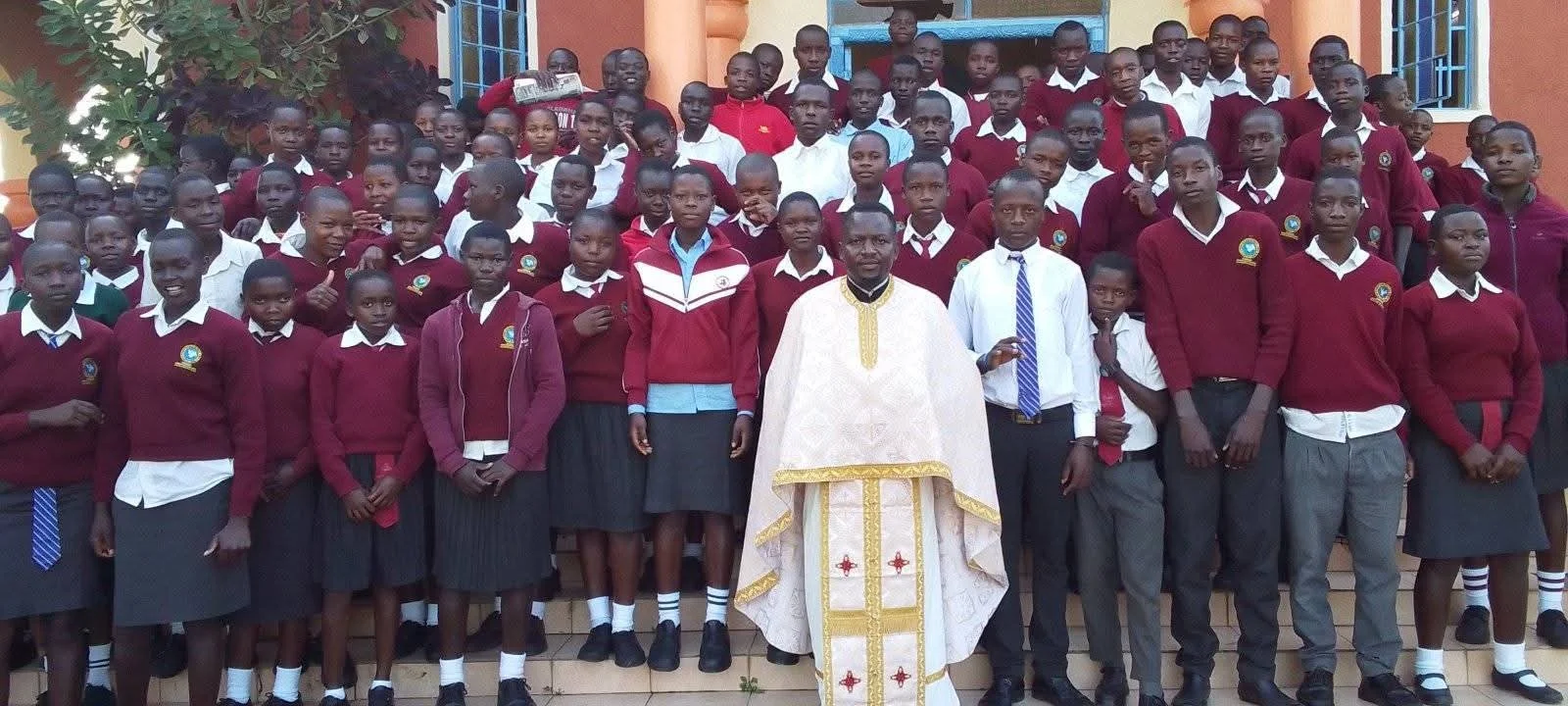
In 2025, we were able to sponsor 230 families from various Elementary, Junior High and High Schools in our community. Each family was vetted through the School District and school principals, and gifted discreetly. Attached are some images from Roseville City Schools.
Our hope is to continue providing for families in similar circumstances throughout 2026, beginning with Easter's delivery. Collections for our next Feed the Hungry campaign will run through Pascha; donations can also be made online at https://saintanna.churchcenter.com/giving/to/philoptochos—please select “Philoptochos Feed the Hungry” from the dropdown menu. Almsgiving is especially meaningful during Great Lent, so we aim to gather most of the funds for our program during this time.
With love and gratitude,
Wishing you a blessed Lent,
Sara Jurrens
President
Saint Anna Greek Orthodox Church / Philoptochos
Great and Holy Lent
A photo of our catechumens from Sunday’s liturgy.
With the setting of the sun last evening and the beautiful Vespers of Forgiveness, we entered the blessed season of Great and Holy Lent. Whether as a catechumen who is preparing to be received into the Church or a faithful steward of the Orthodox Church, let us pray that these days be marked by our repentance before God, our brothers and sisters, the forgiveness of others, a thoughtful fast, a generous giving of alms, and fervent prayer.
Below is a beautiful reflection on how to prepare for the Risen Lord on Pascha, from Fr. William Weir. As always, I thank him for his love, prayers, priestly example, and efforts on behalf of the faithful at the Serbian Orthodox parish and our community.
Our liturgical schedule through next Sunday is as follows:
Monday, February 23 Holy Unction, 6 PM
Tuesday, February 24 Canon of St. Andrew, 6 PM
Wednesday, February 25 9 th Hour/Pre-Sanctified Liturgy, 5:45 PM
Thursday, February 26 Canon of St. Andrew, 6 PM
Friday, February 27 9 th Hour/Pre-Sanctified Liturgy, 8:45 AM
Salutations to the Theotokos, 6 PM
Saturday, February 28 Orthros/Liturgy, 9 AM (Saturday of Souls)
Great Vespers, 5 PM
Sunday, March 1 Orthros /Liturgy 8 AM
Great Vespers, 6 PM @ Saint Anna Parish (Sunday of Orthodoxy)
You will also see a photo of our catechumens from yesterday’s Liturgy. Each of these individuals has a unique story that brought them to Christ and to His Church; thank you to those who stayed in our fellowship hall yesterday for their introductions. Please pray for them and their families, asking that they be prepared for Holy Baptism and Chrismation. Also, please consider serving as a godparent.
Most Resp.,
With prayers and love in Christ,
And asking for your forgiveness,
+fr. christopher
PS. I also ask for your prayers for our southern neighbors in Mexico. Pray for their citizens and for those from our land (and parish) who are working or visiting Mexico at this time. May the Lord hear our prayer, bring peace to the country, and keep safe those in harm's way.
_________________________________
As we begin this year's season of Great Lent, we should make spiritual plans. We have read the prescribed Gospel lessons and other readings during Divine Liturgy and Vespers over the past four weeks leading up to Lent. These Gospel lessons and readings help prepare us for this “Journey to Pascha.” The time is now upon us, and we must answer the question: “What should I do during Lent?” More importantly, the question is: “How shall I prepare myself to greet my Risen Lord on Pascha?”
We understand that the Church guides us on fasting requirements, as well as other changes and activities we should participate in. Our main goal and focus is to grow closer to God in our personal relationship with Him. Everything else is meant to support us. For example, one reason we fast, including the type and amount of food we eat, is to weaken us physically so that we can learn humility. We also develop obedience and moderation through fasting. The reason we avoid dancing and festive activities is also to learn obedience and moderation, helping us shift our focus and prayers toward spiritual matters and communicate with our Savior, Jesus Christ.
No one has said that the Lenten Journey is easy, but it is ultimately enriching and rewarding. One good way to experience Lent is by using a guidebook. There are many options to choose from. We don’t need to be fully immersed in deep theological study; rather, it’s enough to find a source of daily inspiration and insight. That’s why we encourage this small addition to our daily routine. The following paragraphs will offer some suggestions. I’ve identified some of our Orthodox Lenten Classics, as well as a recently released family guide of readings—any of these will certainly be helpful to each of us.
The recent release is *Tending the Garden of Our Hearts - A Daily Lenten Meditation for Families*. This series offers daily short readings aligned with the weekly themes of Lent. Most are based on the life of a Saint and are suitable for family reading, often accompanied by brief discussions among family members. The book is available through www.AncientFaith.org.
The “Classics” are listed below without additional details. Such information is easily found online. You can also find plenty in our Church Library to use. This is not heavy theological reading that’s hard to understand. Each of these books is straightforward and easy to read, with the authors aiming to share knowledge and inspiration with you, not make you feel inadequate.
§ Great Lent-Fr. Alexander Schmemann
§ The Lenten Spring-Fr. Thomas Hopko
§ The Power of the Name: The Jesus Prayer in Orthodox Spirituality-Met. Kallistos Ware
§ Becoming Human-Fr. John Behr
§ God’s Many- Splendored Image-Sister Nonna (Nonna Verna Harrison)
§ The Sayings of the Desert Fathers: The Alphabetical Collection-Edited and translated by Benedicta Ward.
§ The Ladder of Divine Ascent-St. John Climacus
In my opinion, these are the "Classics," but many other books and resources are available from most Seminary Press publishers or bookstores, including the Archangel Gabriel Bookstore at the parish. If, for some reason, you cannot use one of these resources, remember that the PRIMARY reading source is Holy Scripture. There are daily prescribed readings from the Old and New Testaments, especially the Psalter (Book of Psalms).
Whatever you choose to do is up to you. It is most important that you take an affirmative step in this direction. If you start a program of reading and contemplating a daily meditation, don't get frustrated if you miss a day or two and feel the need to “catch up." It's like what doctors tell us about prescriptions: it's better to just let it go and keep going, one day at a time.
Reading a daily meditation is a good practice. We should also remember to be diligent in attending the Pre-Sanctified Liturgies, Vespers, and Divine Liturgy as often as we can. It is especially helpful to attend every evening during the first week of Lent when we read the Canon of St. Andrew of Crete. You will encounter many thoughts that inspire you. Intensive participation in the first week will make the rest of Great Lent feel less burdensome. When we reach the mid-Lent Veneration of the Holy Cross, you will feel a strong sense of accomplishment and spiritual reward that will continue to motivate you for the weeks ahead. Attending all the Holy Week services and engaging in constant prayer will lead you to the glorious day of Pascha. Your personal reward will be a true celebration of our Lord’s Resurrection. You will also experience an inner Resurrection. May God help us all to feel the rewards and positive transformations in our spirits and in our relationship with Him during Great Lent, and grant us the physical and mental strength to undertake this journey properly.
A Season of Preparation & the Sacred Role of Godparents
Thanks be to God, most of our parishes across the United States, regardless of jurisdiction, have experienced significant growth in the number of inquirers and catechumens. Our parish is no exception. Since the fall, we have had approximately 100 individuals studying our Orthodox Christian faith; we expect to receive about 50 of these into the Church by Pentecost. I speak for our entire community when I say that we are very grateful, humbled, and honored to welcome individuals and families into the One, Holy, Catholic, and Apostolic Church.
On Sunday, after the Scripture readings, we will invite all those preparing to be received into the Church to come forward to the solea, in front of the Altar. We will then read two prayers: 1) the Naming of a Catechumen and 2) the Making of a Catechumen, asking the Lord to enroll the candidates among the catechumens and to grant illumination, protection, and growth in faith. Deacon Joseph will then offer a series of petitions for the catechumens, with the faithful responding “Lord, have mercy.” At the end of the petitions, our newly enrolled catechumens will venerate the Holy Gospel and return to their seats. The Liturgy will then continue as usual.
What makes this even more special is that all the parishes of our Holy Metropolis of San Francisco have been encouraged by His Eminence Metropolitan Gerasimos to do the same. Our hope is that this practice will strengthen our parishes and deepen the sense that Great Lent is truly a season of preparation, not only for catechumens, but for all of us. Some prepare for illumination, while others renew their baptismal identities. Together, we walk toward Holy Pascha, when new life in Christ is revealed.
After Divine Services, I have asked those preparing to be received into the Church to share a bit about themselves in our fellowship hall. Although many have been worshiping with us since the fall, much of their time has been spent studying after services. This will be a wonderful opportunity for all of us to welcome them to our parish. It’s also a chance to consider how we can best support them in their walk with Christ—and, if called, as godparents.
The Divine Commandment read from the Holy Gospel during the Baptism service can summarize the role and responsibility of a godparent: "Teach them to observe all that I have commanded you; and behold, I am with you always, to the end of the age." A godparent, regardless of the godchild's age, nurtures growth in understanding and in practicing the Orthodox Christian faith. A godparent should consistently aim to model Christ-like behavior. Therefore, a godparent is called to pray, fast, read from Holy Scripture and the lives of the saints, and participate in the Sacramental life of the Church. As the godparent deepens their faith maturity, they can offer more support to their entrusted godchild. Neglecting their own spiritual life ultimately leads to neglecting their godchild's spiritual well-being. Being chosen as a godparent is an honor; it’s a sacred title and responsibility that I encourage you to consider.
Below are some guidelines I’ve shared with our catechumens. Please follow this link for a helpful article titled “Godparenting 101", http://orthodoxinfo.com/praxis/godparenting101.aspx
1. The goal of a godparent is to instill the newly baptized or chrismated with the Orthodox Christian faith and holiness. A godparent nurtures a godchild in Christ.
2. The spiritual bond between a godparent and a godchild is unique. This relationship is considered closer and more intimate than that of biological parents with their children, as the spirit holds a higher status than the body.
3. Usually, there is only one sponsor, but two may be permitted.
4. A godparent must be an Orthodox Christian. Someone outside the Church can't raise a person within the Church.
5. A godparent's faith and involvement in the Church's sacramental life are essential. Someone who confesses Jesus Christ as Lord must not ignore or contradict this faith in word and actions.
6. The godparent should be mature enough to understand the responsibilities he or she is undertaking.
7. It is wise to consider selecting godparents beyond the family. This approach allows the family to expand and cultivates unique bonds in Christ.
8. A godparent should not be chosen out of obligation or because the individual or family believes they will be offended if a certain person or couple isn’t asked. Many, if not most, situations where people choose a godparent out of guilt or obligation end up being disastrous.
May this upcoming season strengthen our parishes and deepen the understanding that Great Lent is truly a time of preparation, not just for catechumens, but for all of us. Renew your baptismal idenity and, please, prayerfully consider serving as a godparent!
A blessed Great and Holy Lent.
Pan Orthodox Great Vespers commemorating the Triumph of Orthodoxy
Jr.High School. & High School Lenten Retreat (March 20022) REGISTER NOW
Our first annual “Cookie Buffet!”
"Where are you, Adam?" Roseville Screening with the Producer, February 7 after Vespers
WHAT IS THIS FILM ABOUT?
"Where are you, Adam?" was filmed on Mount Athos in the Dochiariou Monastery during the life (and with the blessing) of the late abbot Archimandrite Gregory (Zumis).
This film is an intricate observation of the daily life of monks, their inner world and amazing perseverance in the place so unique that it seems not to be bound by time.
Humans immersed in prayer, work, trials, numerous difficulties and pains come out on the screen as they are without comments or interpretations.
Self-sacrifice and selflessness of the monks leave no one indifferent, so much so that the viewer goes through his own path of searching for answers to a very personal questions: "Where is my heart?", "Where am I now?", "Where is my mind?", which are consequently linked to one main question addressed to the whole humanity: "Where are you, Adam?"
In a sense, the film is a hymn to Faith, Orthodoxy and Monasticism, glorifying the holiness that can ultimately be achieved.
WHAT MAKES THIS FILM SO UNIQUE?
Just like a proper historical document, the film does not contain any acting or staged scenes, no pre-conceived lines and situations, no voice-over. The script evolves as a natural mosaic of the lives of the heroes glued together in one piece;
Devoid of any exaltation or propaganda whatsoever, the film offers a freedom of perception to anyone, regardless of religious, confessional, ethnic, or political views and interests;
The imposition of any ideas in the documentary is ruled out by design, in order to portray the life of monks and the monastery in all its depth and grandeur, thus allowing a viewer to live through his or her own personal spiritual experience.
While immersing himself in this atmosphere the viewer, unobtrusively led by his empathy, becomes not only a witness, but also a participant in the events, thereby doing some useful work inside his heart.